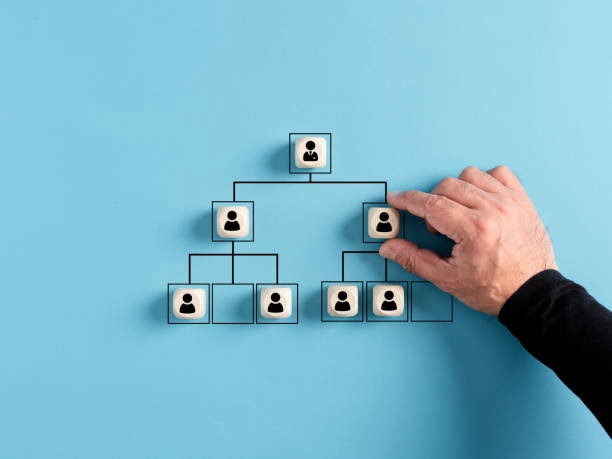
Corporate structure can be defined as the collection of unique brains which individually and combined have the ability to envision and drive change and the types of organisational culture and systems which enable people to challenge what is happening today and underpin the perceived successes of the future.
In finance we can use a balance sheet as a snapshot to identify the underpinning financial infrastructure of an organisation, identifying its strengths and weaknesses. In our development of strategy, we need to similarly be able to step back and understand the operational structure: How are the people and their roles related to each other? How does the organisation work? How does it do whatever it is that it does.
“The use of the word ‘structure’ is the reason we use the word ‘organisation’ to describe the manner in which we operate a business. “
Without an understanding of structure, we have no clarity of how the people within an organisation work, their differing roles, their lines of communication, their reporting lines, their areas of responsibility and accountability, the framework of relationships between the people and the various systems that enable the business to operate on a day-to-day basis, and also to evolve.
Imagine the number of people involved within a company’s supply chian, each with their individuality and their beliefs and objectives, but simultaneously each also having to play a role in the generation of business success. Without organisation and structure, this would simply not happen. There is no one right or correct organisational structure, there are as many different types of structure as there are types of organisation.
 The Sttewwards Limited
Leave a comment